From the UK to New Zealand and finally Tasmania’s wild west coast, this former Royal Marine Commando and undercover detective now helms one of the state’s most iconic cultural attractions.
▼
Where did you grow up, and how did you come to call Tasmania home?
I was born and spent the early years of my childhood in south-west England, then moved to Singapore where my father was working for the government for several years.
I spent my early professional life back in England, before moving to New Zealand to run a tourism business, and then to turn around a flailing farm. Around that time, my son Cameron was nearing the end of his university studies, and had decided that he wanted to join the police service in Tasmania. I came with him to Tassie, and got caught on the wrong - or right, depending on which way you look at it - side of Covid lockdowns. My wife and I had planned to stay for one or two years, but we’ve been here ever since.
What did life look like for you in the years before you left the United Kingdom?
From a young age, I was that kid who went to school to play sport and eat lunch - I never did particularly well academically.
When I left school, I did some menial jobs in factories and the like, but realised pretty quickly that I wanted more, and decided to join the defence force in the Royal Marine Commandos. My sporting ability held me in good stead, and I was awarded the King’s Badge for the best all-round recruit in my first year. I later sustained a back injury, so I left and joined the police force in my early twenties.
I found that I did pretty well in this line of work, and became the youngest ever detective in the first constabulary that I joined. I ended up working in some very specialised undercover work for about 15 years, before moving out of hands-on police work and becoming a member of the Child Exploitation and Online Protection (CEOP) Command. I left the force when I was 50 years old, and moved to New Zealand to join my family who had moved there some years earlier.
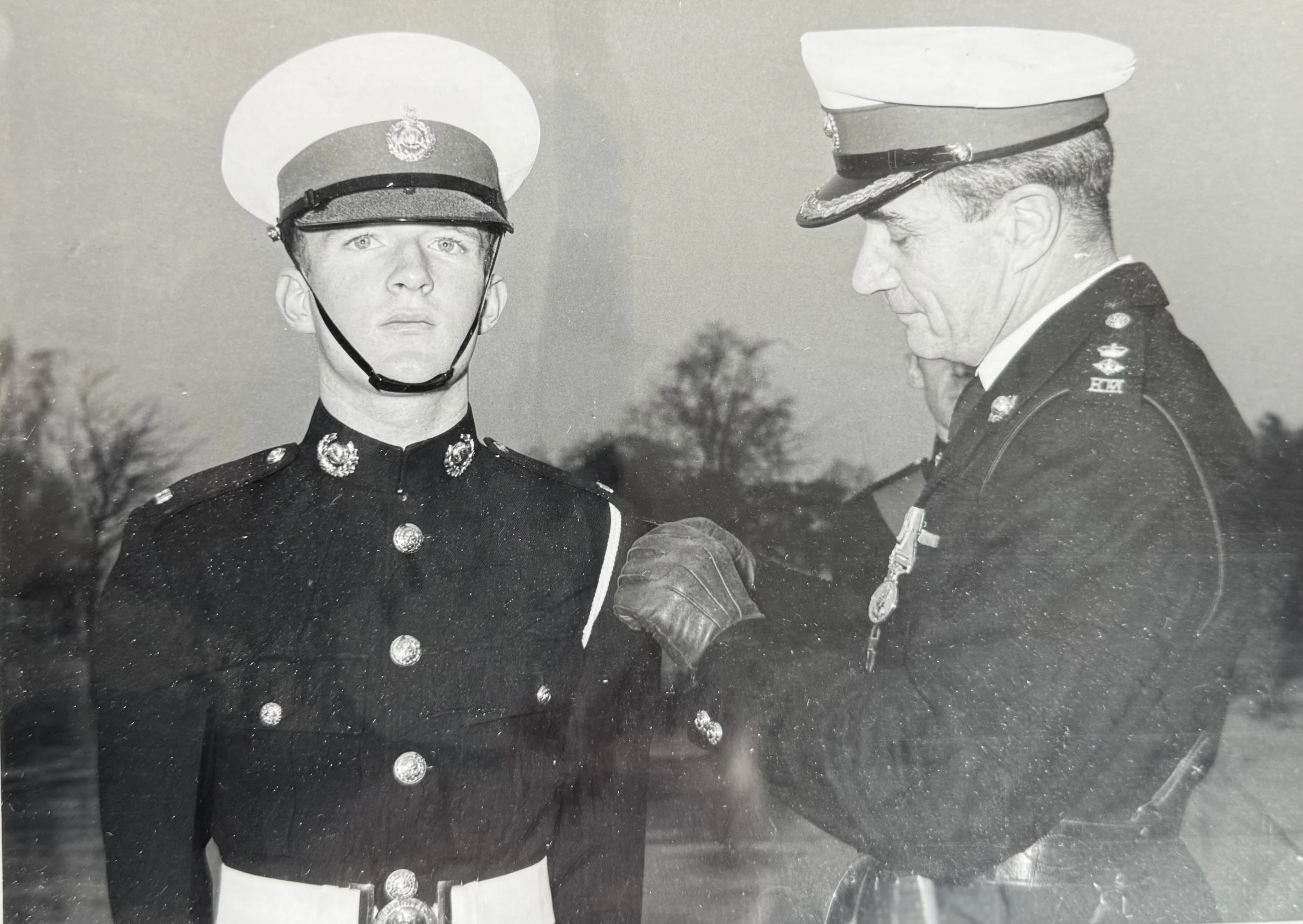
Ian Robertson during his career with the Royal Marine Commandos (image supplied)
Despite not planning to stay in Tasmania when you first came over, you ended up as the Executive Manager at Bethlehem House, the state’s largest provider of crisis accommodation for men experiencing homelessness. How did that come about?
I had sold the farm in New Zealand to move with Cameron to Tasmania, but it got to a point where I was eating too much into capital and I needed to go back to work.
My role at Bethlehem House originally felt a bit strange. I’d spent all of my working life putting people into prison, and now I had an opportunity to help men - many of whom had offences to their names - avoid getting caught in the justice system. An important part of that work was rehabilitating these men and getting them back into work, so I got a team together to deliver a project that would improve their opportunities of gaining meaningful employment. We got a CV writer on board, secured funding, and made a presentation at Hobart’s Town Hall, where some of the men we were working with stood up and shared their stories. When I started at Bethlehem House, we had about one in 60 men working. By the time I left, it was closer to fifty percent.
I spent 18 months in that role, and the experience really integrated me back into the working cycle, and into Tasmania more generally. There was no longer any point in moving back to New Zealand. I wanted to stay.
Since 2023, you’ve been the General Manager at West Coast Wilderness Railway. How did you end up on Tassie’s wild west coast?
When he graduated from the Police Academy, my son was posted to Burnie in the north-west of the state, so my wife and I bought a lodge to do up in nearby Spreyton. Around the time that we sold that property, a house in Strahan popped up, and we decided to move to the west coast.
West Coast Wilderness Railway knew that I was in the area, and offered me a role as their Food & Beverage Manager. I knew nothing about railways, tourism, or food and beverage, but I took the job. From the get-go, I knew that it would be an interesting business to work in - it’s got the demands of the tourism sector, it’s an anchor attraction in a remote regional area so it means a huge amount to the local community, and it’s funded by the government. There’s a lot to juggle.
The CEO at the time could see that I had potential for executive-level leadership and ended up telling the government that I should hold the fort when he resigned from his role shortly after I signed my contract. A week later, I travelled down to Hobart to have what I thought would be an informal chat with the Department of State Growth. I walked in to find a full board, and was appointed as acting General Manager soon thereafter. By August that year, my role had been formally instated.
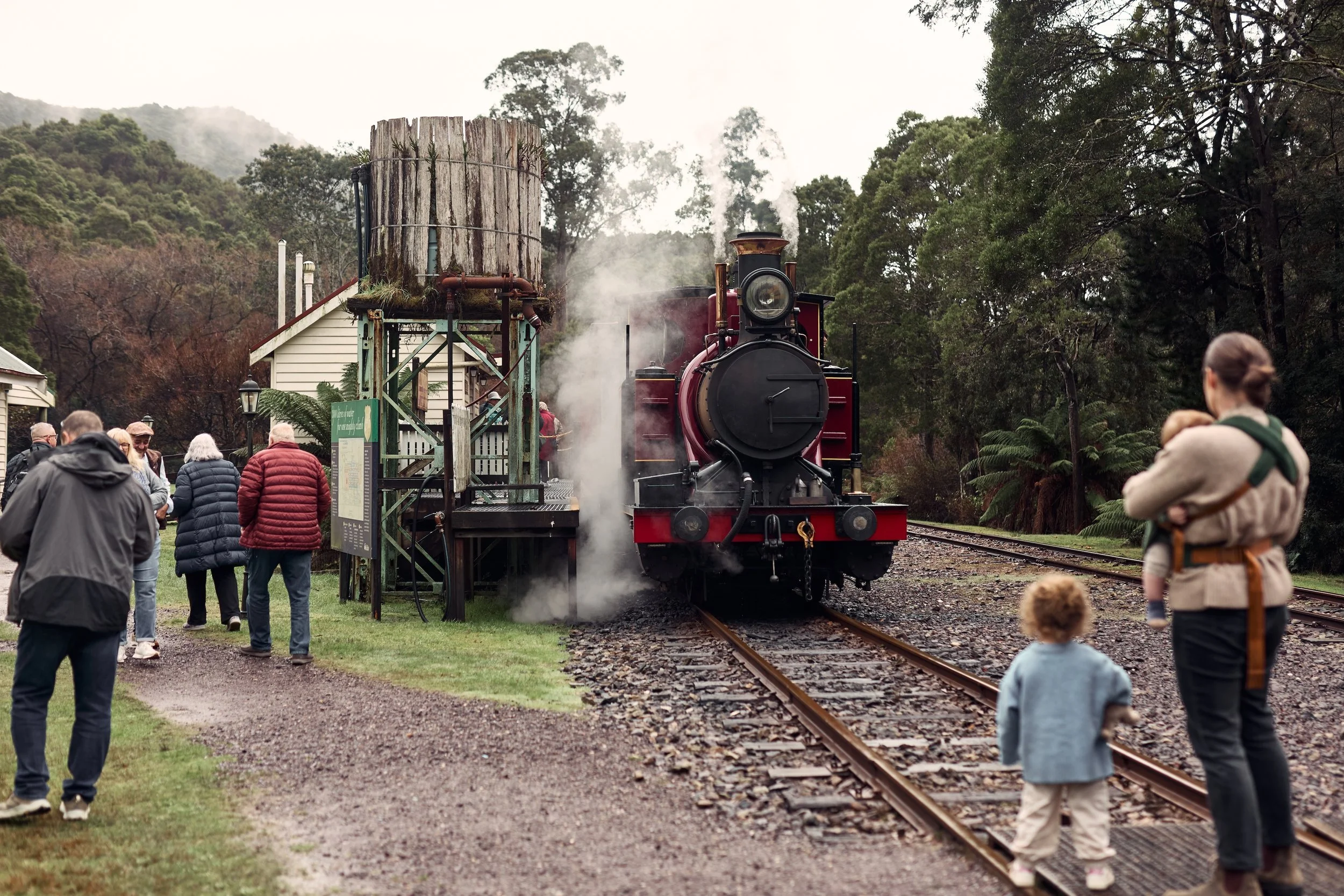
West Coast Wilderness Railway (image: Ness Vanderburgh)
West Coast Tasmania is a tourist drawcard for its remoteness, heritage and wilderness. What’s it like to live on the edge of the world at the bottom of the world?
You definitely feel that remoteness. It’s a 2.5-hour return trip to the closest Woolworths or Bunnings. Once you stop for fuel and something to eat, that’s a full day. Winters are often wet for weeks on end, which I’m still getting used to, but the long-time locals don’t even see or feel the rain - it’s just a way of life for them.
I’ve been told that you can consider yourself a local if you’ve got five generations in the cemetery, so that’s never going to happen for me! But I’m grateful to have been able to integrate into the community and to be able to give something back. In my position, I’ve got the ability to give young locals a job, which provides them with a good start to their future. That’s gratifying.
Where are the best places to eat and drink on the west coast?
I eat at Tracks Café in Queenstown several times a week. As one of our West Coast Wilderness Railway venues, I might be biased, but it does great breakfast and burgers. In Strahan, our Tracks on Point Café is like a boutique burger bar, using exclusively Cape Grim beef and top-end Tasmanian ingredients. You can try the Mt Lyell Lager, our own West Coast Wilderness Railway beer at both venues. The brief was hot summer’s day, easy drinking, pairs well with burgers and snacks - and the brewers nailed it.
Risby’s Restaurant at Risby Cove and Hamer’s Bar & Bistro at Strahan Village are also great options for local dining.
What are three must-dos for every visitor to Tasmania?
Obviously come out on one of our West Coast Wilderness Railway journeys from Strahan or Queenstown!
Visit Port Arthur Historic Site on the Tasman Peninsula to get a sense of Tasmania’s convict history.
And spend a day at Mona. It says a lot about David Walsh that he can play a game of cards and then create a world-class art museum in Hobart.
What does the perfect day off look like for you?
In my tinnie on Lake Burbury or Lake Rosebery, with a fly rod in one hand, and a Mt Lyell Lager in the other.