Chasing The Aurora Australis
Every so often in Winter, half of Tasmania either gets in the car or steps into their backyard way past curfew on a weeknight. No event, no ticket, no fire. Just a notification or rumour that the sky is about to do something very beautiful, and suddenly Instagram is flooded with images of the Tasmanian sky alight in hues of greens and purples. The happy culprit? The Aurora Australis - or Southern Lights - a Winter-favouring phenomenon that turns the night sky into one of nature’s most spectacular shows.
The Aurora doesn't book ahead and doesn't hang around, but the local treasure hunt requires only a half-hour drive (maximum), a fold-out chair, and a clear view south. Here's how to join the chase.
▼
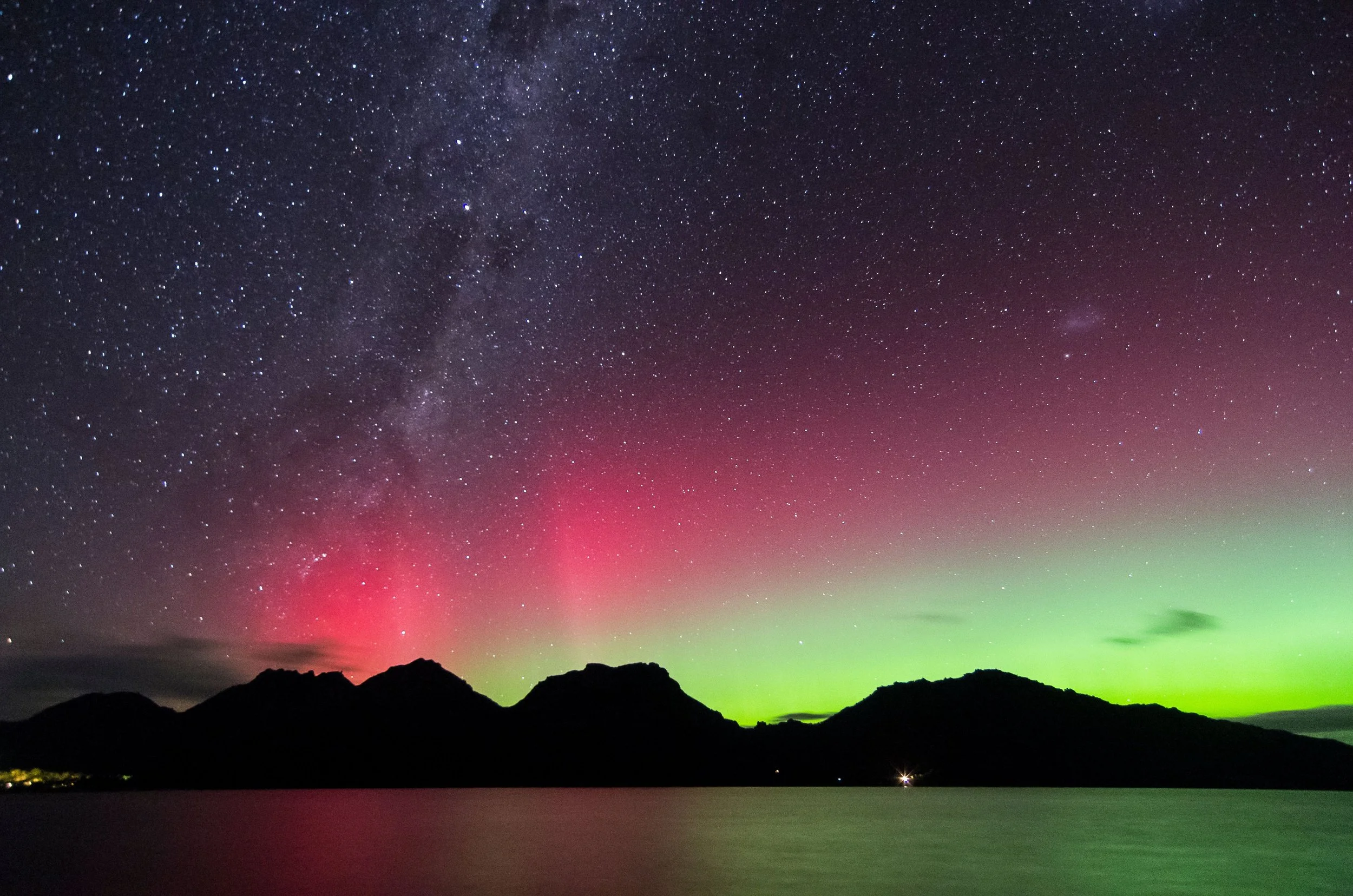
Aurora Australis over Coles Bay (image: Luke O’Brien Photography)
THE SCIENCE
To watch the Aurora Australis is to watch the sun have a tantrum, ninety-three million miles away. That big bright ball in the sky is in a constant state of throwing off charged particles, but when it's feeling particularly dramatic, it hurls out a proper eruption's worth. Earth's magnetic field catches the lot and funnels it toward the poles, where the particles bump into gases in the upper atmosphere and make them glow: oxygen burns green (and, way up high, red), while nitrogen handles the pinks and purples along the bottom edge. The whole show happens 100 to 300-odd kilometres overhead, and because it's poured out around the magnetic poles, the further south you stand, the better your seat. Gratifyingly, Tasmania is about as far south as you can stand without joining an Antarctic expedition. Bottom of the world indeed.
There are two things worth knowing. One: Winter doesn't produce more Auroras. The sun doesn't check the calendar, it just produces more darkness during the shorter days, which down here means nights long enough to chase a sky show and still get a solid night's sleep. Two: the sun runs on a roughly 11-year activity cycle, and we're currently on the loud side of it, which is why the alerts have been busier these past couple of years. Take advantage while it lasts.
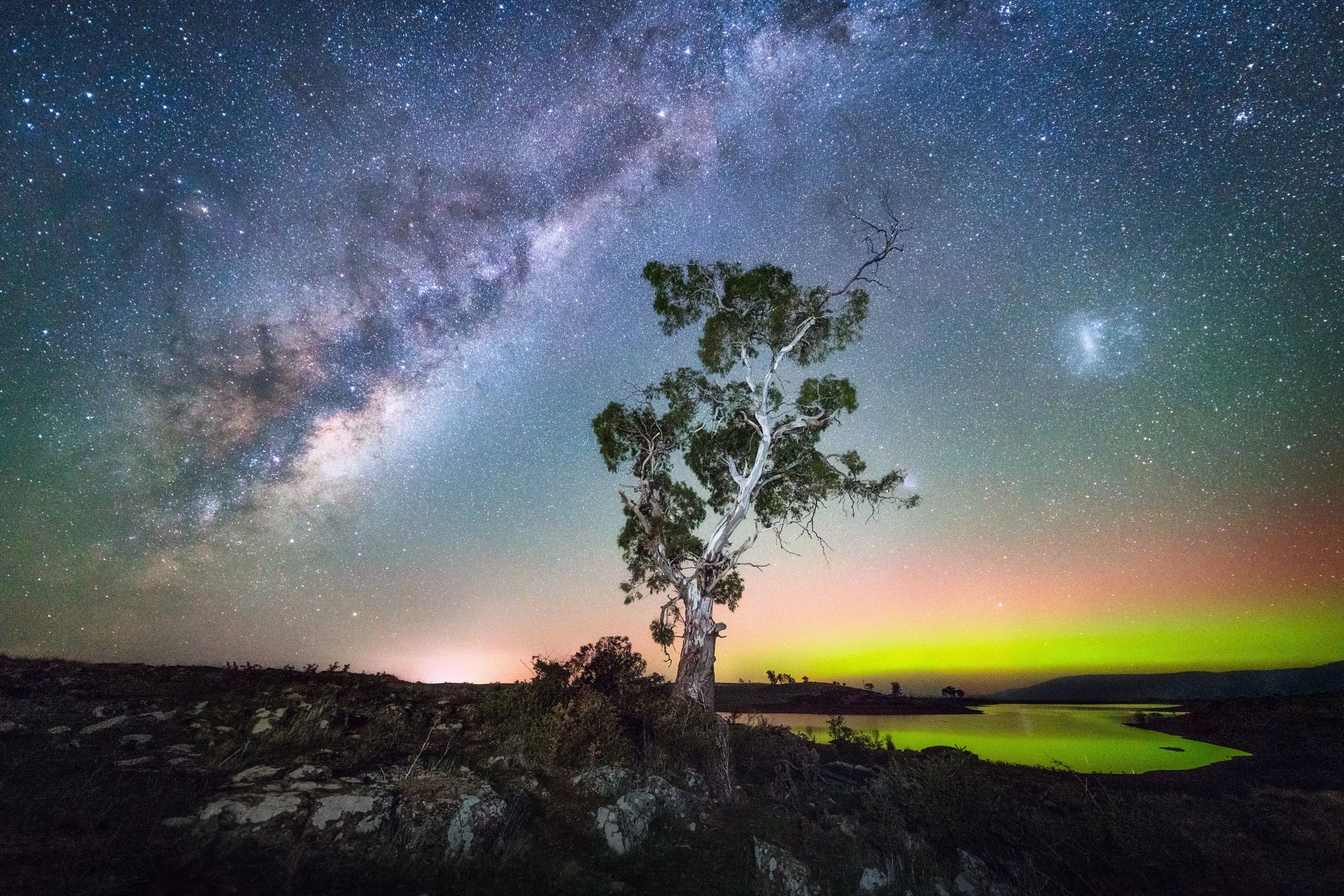
Aurora Australis (image: Luke Tscharke)
THE INTEL
Timing is most of it. The Aurora Australis Tasmania Facebook group is effectively the state's most useful sky-gazing group chat - we’re talking live sightings, cloud reports, and the occasional 11pm all-caps post that empties lounge rooms quicker than a cold snap hits Kunanyi. Learn to read the Kp index - a zero-to-nine scale of how rattled Earth's magnetic field is at any given moment (higher is better, with Tasmania's odds really picking up at around Kp 5, at which point you should already have the keys in the ignition). Aim for the darker end of the moon cycle, and check the cloud situation before you commit. Beyond that, the Aurora answers to no one's schedule, and the sooner you make peace with that, the better chaser you'll be.
WHAT TO EXPECT
Honesty time: most nights, it's very hard to see. Blame your own eyes - in the dark, they favour the cells that are brilliant at detecting faint light and hopeless at colour, so a modest Aurora reads as a pale glow on the southern horizon that could plausibly be cloud. The colour is there; you're just not built to collect it.
But, when the solar conditions line up just so, the Aurora crescendoes from a whisper at the edge of your sightline into a visual holler that’s impossible to ignore: curtains of light, shifting shapes, and colours your eyes can finally catch. On these nights, it’s simply un-Tasmanian not to be out in a paddock in your slippers, head firmly inclined skyward.
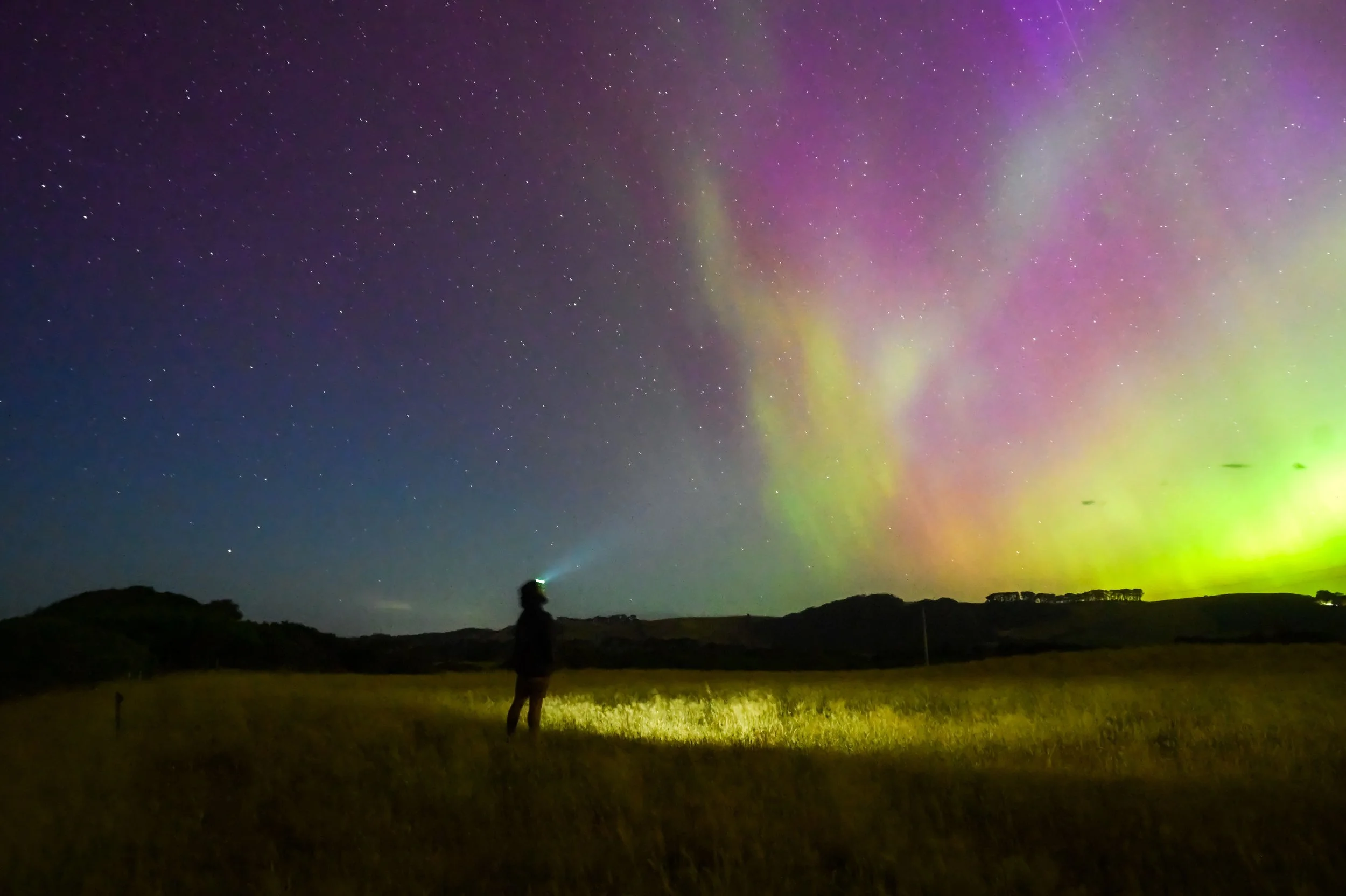
Aurora Australis Night Sky (image: Jordan Wilson)
PHOTOGRAPHING IT
You don't need the big rig. Any recently-released phone on night mode, and braced on a tripod, fence post or the roof of a car, will pull colour out of a sky that looks like nothing. Just make sure the flash is off, and hold still for the few seconds it needs to capture the magic. If you're bringing a proper camera, the recipe is old and reliable: the widest lens you own, shoot RAW, aperture as open as it goes, focus set manually to infinity (autofocus will hunt all night and find nothing), and start with an around 10-second exposure before adjusting to taste. One caution: check the forecast for your battery, too. Cold nights eat charge, and the Aurora has a documented sense of humour about peaking the moment your camera dies.