Q&A: Marta Dusseldorp
From acclaimed television roles to an enduring love of theatre, Australian actor Marta Dusseldorp has built a career on compelling storytelling. Now firmly at home in Tasmania, she reflects on the island’s creative spirit, the pull of the west coast and her latest theatrical venture, The Sound Inside.
▼
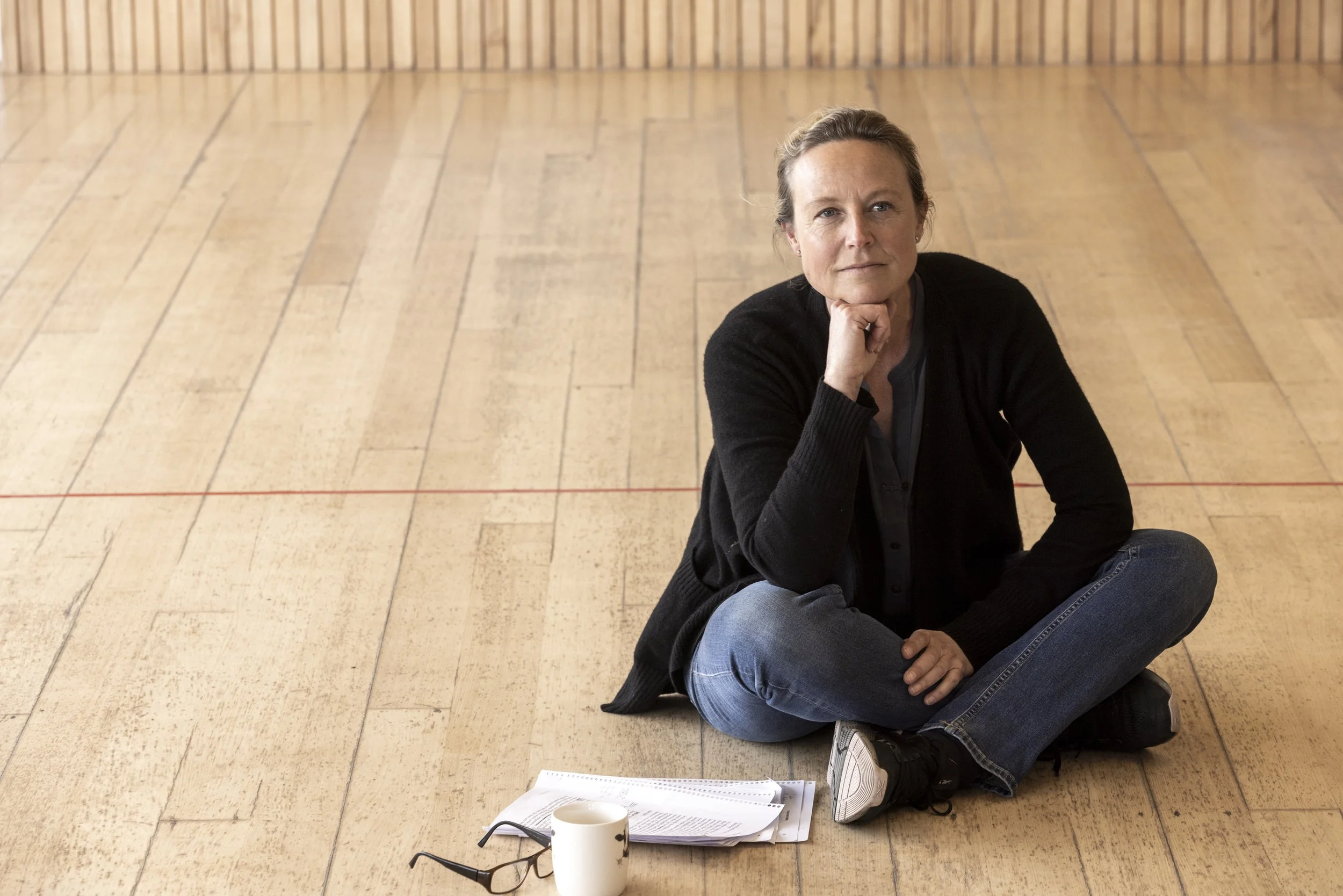
Marta Dusseldorp in rehearsal for The Sound Inside (image: Brett Boardman)
Where did you grow up, and how did you end up here at the bottom of the world?
I grew up in Sydney, and moved to Melbourne to study at the Victorian College of the Arts in my teens. I later ended up back in Sydney, where I spent a lot of time at Sydney Theatre Company as part of its first full-time actors group.
I had a number of television roles - in Crownies, Janet King, A Place To Call Home and Jack Irish - over the next 10 years, but I would always jam a play in between seasons to reconnect with the audience. Without my theatre grounding, I wouldn’t be who I am today - it has always felt like the bedrock of my life.
My husband Ben (Winspear, actor and director) grew up in Tasmania, and asked if I would come here while our two kids were really young, to give them the natural, authentic experience of childhood that he’d enjoyed. I agreed on the proviso that we could keep creating, so we formed our own production company Archipelago Productions, and came down for our first production, The Bleeding Tree at the Theatre Royal. Then Covid hit, and Tassie got locked in. We became a part of this beautiful movement where people got to stay sustained and nurtured and nourished through theatre. Audiences were hungry, and the arts were the healer.
During that time, we developed Bay of Fires, a television drama series that we shot on the west coast of Tasmania. We ate the fruits of that incredible region over two seasons. It’s a place where you can connect with so many different kinds of people, landscapes and opportunities.
I’ve been back to the mainland on and off a few times since, but ultimately, I keep getting drawn back. I’m so thrilled to be working on another play - The Sound Inside - here, and to bring something complex, nuanced, exciting, thrilling and entertaining to that wonderful audience we found when we first moved down.
What drew you towards The Sound Inside as your next project?
Adam Rapp, who wrote the play, is one of the most prolific American writers of the time. He’s a champion for novels, literature, and reading, and he’s brought back to us the power of the written word - he examines it to its extremities, along with human connection and emotion. Theatre should always be asking difficult questions, and The Sound Inside does that to the nth degree.
There are just two characters: one, who I play, is a 53-year-old professor. She is going through things that I am going through in my own life. It’s important to me that I see myself reflected on the stage, and give that gift to the audience, so we can understand who we all are in deeper, richer ways. The second character is a 19-year-old student, played by Griffin McLaughlin who we’ve wrenched back from WAAPA after working with him on The Carbon-Neutral Adventures of the Indefatigable Enviroteens, a novel that we adapted into a play in 2023. We end up with two different generations and two different genders on stage, but it never goes where you think it’s going to - it does something else, again and again.
The production has been a serendipitous collision of exceptional people. Lee Lewis, our Director, is an old friend of mine with whom I did a very challenging play at Griffin Theatre Company. If you can walk out of something like that unscathed, you’re friends for life. Having her as part of the storytelling conversation here in Tasmania is a real coup. We also have Jason James returning to lights, Guy Swan as our sound designer, and Ben Winspear on set design.
This play - like all theatre should be - is about letting people see back to themselves, think deeper, have a giggle, roll around in the muck, and maybe find out more than they knew about themselves and others.
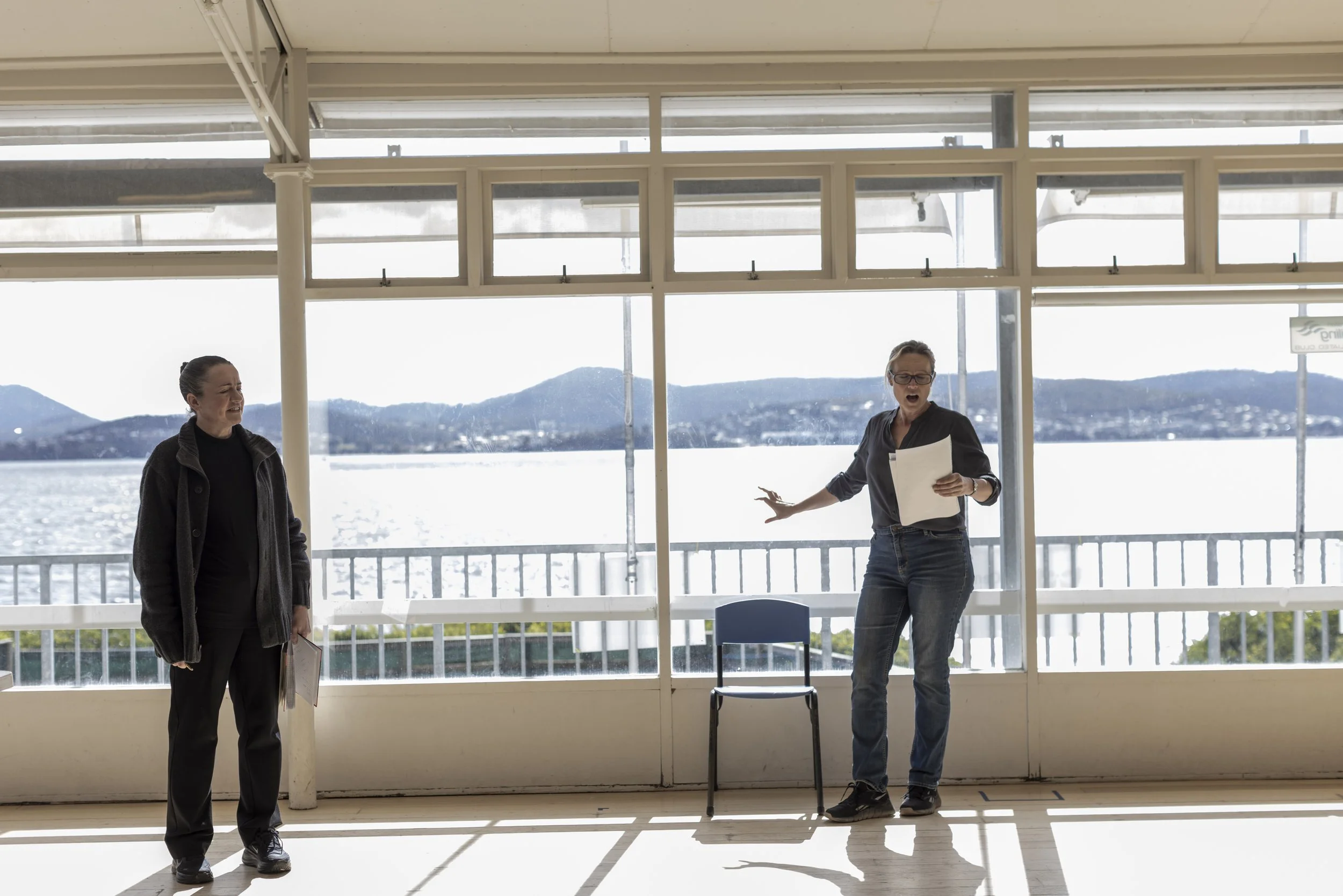
The Sound Inside Director Lee Lewis and Marta Dusseldorp (image: Brett Boardman)
Did you always want to be an actor?
My younger brother died when I was eight years old, and the world dropped out from under me. I began to bury myself in theatre, in becoming other people, and finding my space in a God-less universe. I also believed that I could see him at the back of the stalls, so the stage became an obsession.
Later, I sent myself away to boarding school, which was part of that journey of trying to find the Marta I didn’t know existed. I met a drama teacher there who believed in me enough that I started believing in myself, too, and had a similar mentor at drama school who would take me aside and tell me I was an actor. I was totally addicted. It felt impossible that there could be any other pathway for me.
It’s been a long journey of discovery since then. Theatre gave me the base, the people and the circus family; television gave me the audience that grew and grew, and put a wind under me to believe that I - as a woman - had something to say and could keep going.
We know now that menopause has historically been the unspoken courage slammer. We’re getting on top of that medically, which is giving us a fighting chance, but there’s still a ceiling that we aren’t yet able to push off. I still feel it. It makes me sad and angry, but I have a metaphorical bag packed and at my door, ready to fight again. Otherwise, what example am I setting for my daughters, and what have I learnt from the women before me? I’m determined to keep hunting for the thing that allows us to speak, because we have a lot to say.
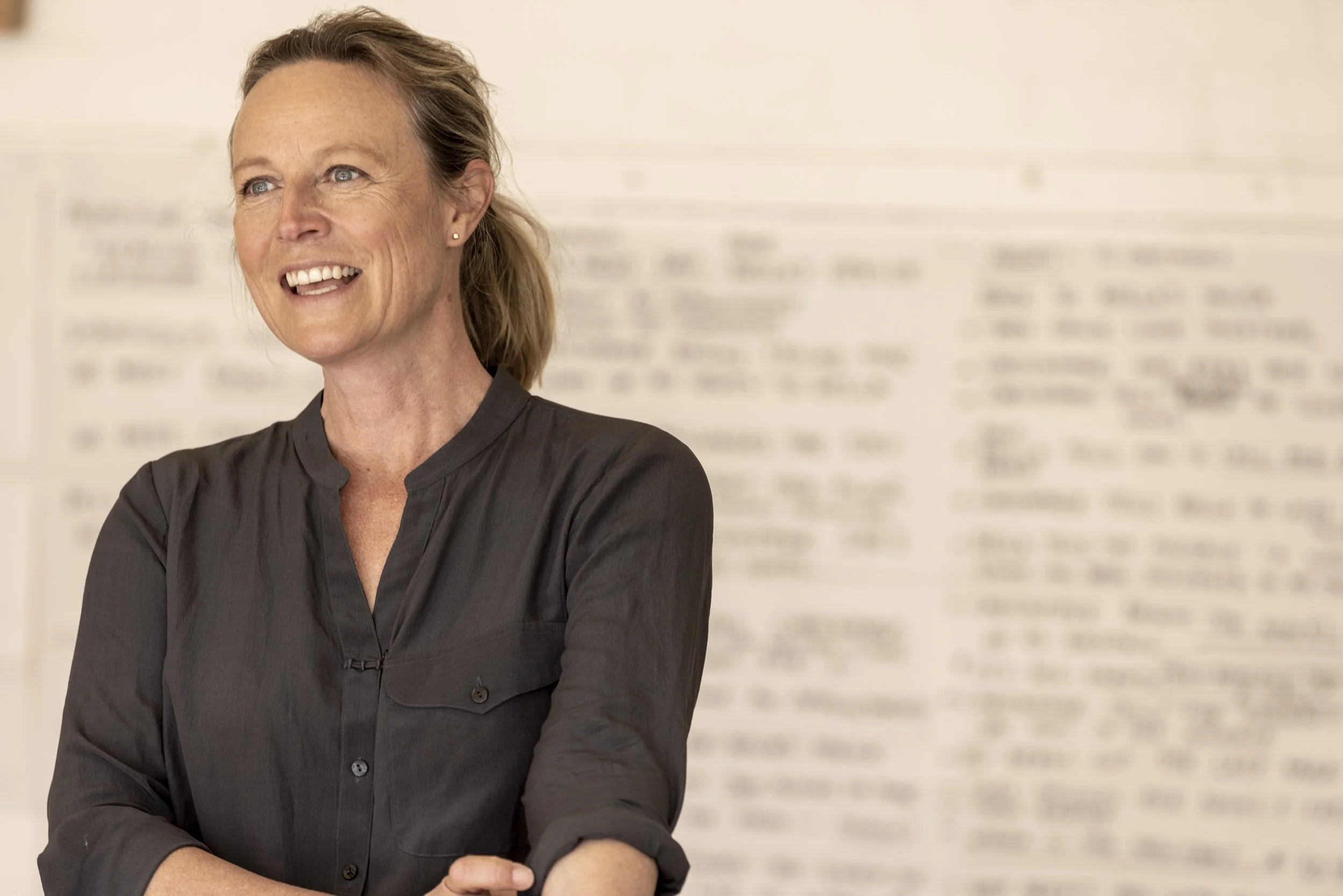
Marta Dusseldorp (image: Brett Boardman)
Do you call Tasmania ‘home’ now?
Home is my family - wherever they are will always be home.
But, ultimately, whenever the wheels hit the tarmac in Hobart, I feel an overwhelming sense of wellbeing. There’s a nurturing about this place - in the time that sits between the trees, we can walk freely, have space, and care about each other. Here, I can hide, recharge, open up again, download, and dare to dream.
Where are your favourite places to eat and drink in Tassie?
Our family has a rule that you’re not allowed to buy coffee out. You might as well put down the money you’d spend on a daily coffee at Bett Gallery, and buy something by a local artist that will give you more every day than a cup of coffee ever could.
However, I do indulge in an incredible loaf of Storm River & Stone sourdough from Meat Mistress every week. It’s only available on Thursdays and Fridays, and I manage to ration it to a $1 a day investment.
While we’ve been rehearsing in Sandy Bay, I’ve also discovered In Good Company. Their chilli scrambled eggs are excellent. And a little further afield, I regularly drive out to Barilla Bay for their scallop pies and oysters, and I adore Cinnamon & Cherry in Franklin for unique and authentic Turkish delicacies.
On the west coast, we loved MIMSO Kitchen. The lovely chef Mim does the most incredible Thai food out of a motel kitchen in Queenstown.
Where do you get away to for a Tasmanian staycation?
We have a place in Queenstown just off the main street. It was the town’s old cabaret venue. We rarely get there, but it was our home when we made Bay of Fires, and one day we’re going to make some art in it and invite audiences in - that’s what it should be.
What are three must-dos for every visitor to Tasmania?
The first is a don’t: do not wear a puffer jacket. There are so many alternatives - think floor-length wool jackets, coats, scarves, hats and gloves. A puffer jacket is just a dead giveaway that you’re not a local.
I suppose you should head to that unknown gallery down the river to see the Anselm Keifer wing.
And have a LARK whisky.
Mainly, though, soak in everything that Tasmania encapsulates. If working in the west taught me anything, it’s that if you don’t stop and listen, you miss the best bit.